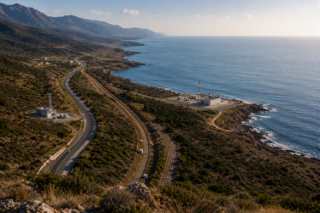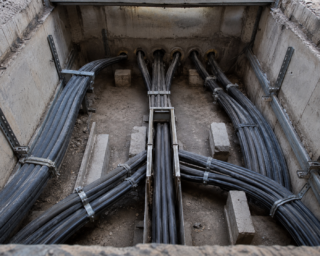
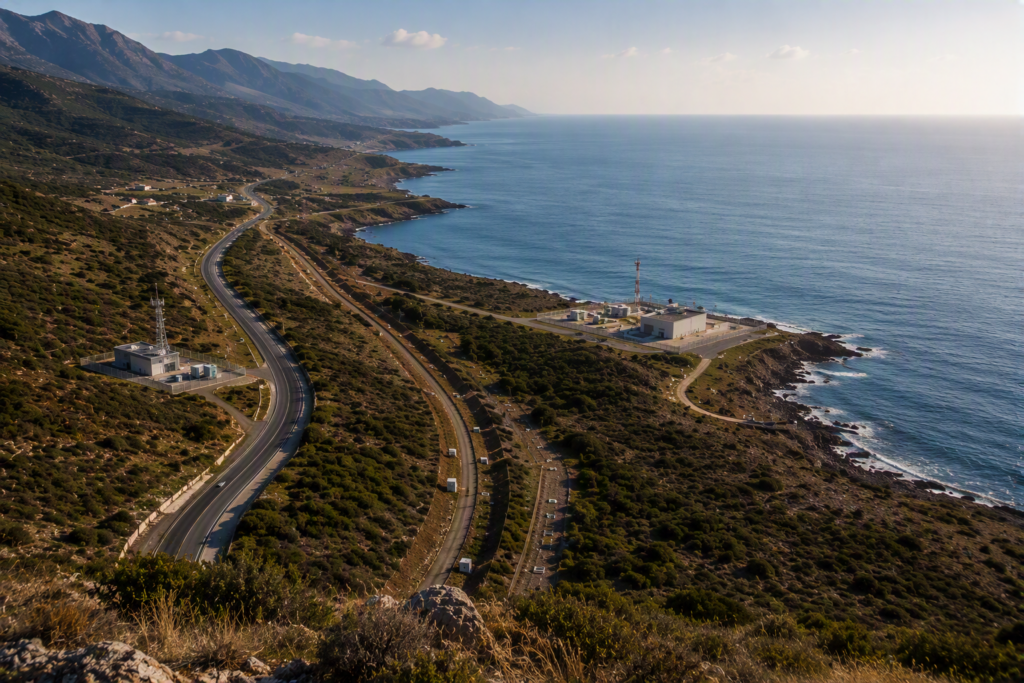
Most digital services rely on infrastructure that attracts little attention until a disruption exposes it. Payments, cloud applications, public services and cross-border communications all depend on international connectivity. Submarine cables carry approximately 99% of the world’s Internet traffic and support services including financial transactions, cloud computing and government communications.
Digital sovereignty is broader than connectivity. Africa’s policy direction includes stronger and more harmonised data governance, shared standards and a safe, trustworthy digital environment. Wholesale connectivity sits beneath that wider ambition: it determines which routes are available, how much capacity can be used and where networks can exchange traffic.
At this layer, sovereignty is neither isolation nor ownership of every asset. It is the ability to make informed choices, reduce avoidable dependencies and maintain service when one route or interconnection path becomes unavailable.
Those choices protect more than network availability. They support access to digital services across borders, give operators room to respond as demand changes and reduce the operational impact of relying too heavily on one corridor, one landing area or one interconnection path.
Executive takeaway
Routes determine where traffic can travel. Capacity determines whether those routes can absorb demand. Interconnection determines how efficiently traffic can reach other networks and markets. Resilience depends on the three working together.
More infrastructure does not automatically mean more resilience
The number of assets alone does not show how a connectivity architecture will behave under pressure. Physical exposure, longer repair timelines in some regions, geographic concentration and dependence on a small number of cable systems remain recognised resilience challenges. Route diversity, preparedness and coordination recur throughout the analysis.
Two nominally separate paths may still share a landing area, terrestrial corridor or another point of concentration. Current guidance therefore calls for greater geographic diversity and redundancy, including varied routes and redundant landing points.
End-to-end resilience chain
Submarine route > landing infrastructure > terrestrial backbone > interconnection > alternative international path
Routes, capacity and interconnection cannot be assessed in isolation. A backup route offers limited protection if it cannot carry meaningful traffic. Capacity concentrated on one corridor leaves the same dependency in place. An interconnection option is only useful when the transport path needed to reach it remains available.
What credible connectivity choices look like in practice
Route diversity has to survive closer inspection
Route diversity should be examined across submarine systems, landing points and the onward infrastructure that carries traffic. Current guidance gives particular attention to varied routes, redundant landing points and underserved regions.
A useful test is whether an alternative path removes a dependency or simply shifts traffic to another service with the same exposure.
Capacity matters where and when it can be used
Capacity figures do not answer every continuity question. Buyers still need to establish where capacity is available, whether it can be activated under the relevant commercial and operational arrangements, and what remains available if a major path is disrupted.
Usable capacity is therefore contextual. The same headline figure can describe very different levels of resilience depending on the routes involved, the activation conditions and the traffic that an alternative path can absorb. Capacity planning has to account for normal growth and disruption, not one or the other.
Interconnection is valuable when it preserves choice
Internet Exchange Points allow networks to exchange traffic locally and access locally available content. Research on IXPs in Kenya and Nigeria documents the role of exchange points and their surrounding infrastructure in the development of stronger local Internet ecosystems.
Local exchange does not replace international reach. Its value lies in adding appropriate regional options while preserving access to the international destinations a network must reach.
Recovery starts before a route fails
Recovery depends on more than engineering. International guidance calls for clear and predictable permitting, maintenance and repair frameworks, a single government contact point, and fewer legal and regulatory barriers in areas including customs and cabotage.
Timely deployment and repair, risk identification, monitoring, mitigation and coordination across public and private stakeholders all shape recovery. The arrangements need to be understood before a route fails.
A practical test for wholesale connectivity decisions
A wholesale connectivity decision should stand up to five practical questions:
- Are the primary and alternative routes genuinely independent?
- How much capacity is contractually available on each relevant path?
- What capacity can be activated during demand growth or disruption, and under which conditions?
- Which regional and international interconnection options remain available?
- What rerouting, escalation, repair and restoration arrangements are documented?
No network can remove every dependency. A sound decision begins by making those dependencies visible, testing whether alternatives are credible and establishing what service can still be delivered when conditions change.
Choice under pressure
Africa’s digital ambitions bring together harmonised data governance and a trusted digital environment with the practical demands of repair readiness, risk management and geographic diversity.
At the wholesale layer, these issues meet in the choices available under pressure: a path that is genuinely different, capacity that can still be used, interconnection that continues to reach the right networks, and recovery arrangements defined in advance.
New infrastructure creates lasting value when it leaves networks more room to reroute traffic, absorb demand and recover from disruption.